
Introduction
Energy and resources are essential components of modern economies and international relations. Energy powers production, transportation, and communication, while natural resources provide materials for industry, agriculture, and technology. Understanding energy and resources is crucial to analyze economic growth, geopolitical strategies, and environmental management.
Global energy and resource systems influence trade, investment, and policy decisions. Countries depend on stable access to energy and raw materials for development. This article examines energy types, resource management, institutions, policies, challenges, and future trends.
Definition of Energy and Resources
Energy
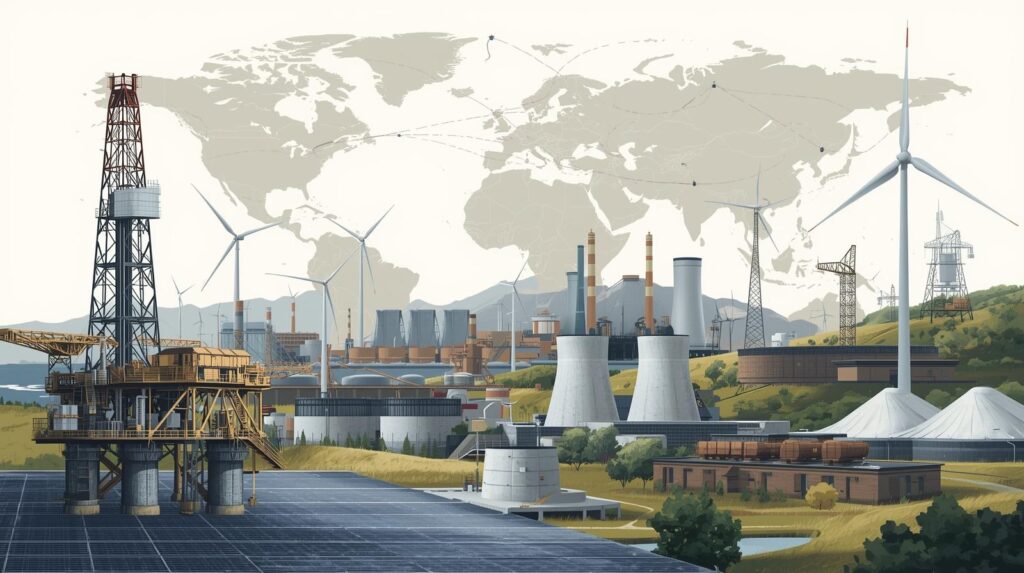
Energy refers to the capacity to perform work. In global systems, energy includes:
- Fossil fuels: Oil, natural gas, and coal.
- Renewable energy: Solar, wind, hydro, and geothermal.
- Nuclear energy: Power generated from nuclear reactions.
Energy fuels industrial production, transportation, and domestic consumption. It also influences national security, trade, and international cooperation.
Resources
Resources include materials and commodities used for production and consumption:
- Natural resources: Minerals, metals, water, soil, forests.
- Renewable resources: Energy, water, forests, and fisheries that can be replenished.
- Non-renewable resources: Minerals, oil, and gas that are finite.
Resource management ensures availability, equitable distribution, and sustainable use.
Global Energy Systems
Energy Production
- Extraction and generation of energy from fossil fuels, renewables, and nuclear sources.
- Production requires infrastructure, technology, and labor.
- Energy production impacts global trade and geopolitical relations.
Energy Consumption
- Industrial, transportation, and domestic sectors drive energy demand.
- Consumption patterns vary by country, economic development, and technological adoption.
Energy Trade
- Energy commodities such as oil, gas, and coal are traded internationally.
- Global supply chains connect producers and consumers through pipelines, shipping, and trading hubs.
Energy Infrastructure
- Power plants, grids, pipelines, and ports support energy systems.
- Investments in infrastructure are critical for stability, efficiency, and access.
Types of Energy
Fossil Fuels
- Oil, coal, and natural gas remain primary energy sources in most economies.
- Used in electricity generation, transportation, and industrial processes.
- Extraction and transport create geopolitical and environmental concerns.
Renewable Energy
- Solar, wind, hydro, and geothermal energy reduce dependence on fossil fuels.
- Policies and investment support growth in renewable energy infrastructure.
- Global cooperation facilitates technology transfer and standard-setting.
Nuclear Energy
- Nuclear reactors generate electricity through fission processes.
- Used for baseload energy supply and industrial applications.
- Safety, regulation, and waste management are central to operations.
Emerging Energy Sources
- Hydrogen, bioenergy, and offshore wind expand options for energy production.
- Research and innovation influence adoption rates and international investment.
Global Resource Management
Resource Extraction
- Mining, drilling, logging, and fishing provide raw materials.
- Extraction strategies balance production, environmental impact, and economic benefit.
Resource Distribution
- Transportation and storage systems ensure availability across regions.
- Resource-rich countries participate in international trade, influencing global markets.
Resource Regulation
- National laws and international agreements govern extraction and trade.
- Organizations monitor compliance with environmental and trade standards.
Sustainability Measures
- Efforts focus on efficient use, recycling, and conservation of resources.
- Policies integrate environmental management with economic planning.
Institutions Governing Energy and Resources
International Energy Agency (IEA)
- Provides data, forecasts, and policy guidance.
- Coordinates energy security strategies among member states.
Organization of Petroleum Exporting Countries (OPEC)
- Coordinates oil production and pricing policies.
- Influences global energy markets and investment decisions.
United Nations and Specialized Agencies
- Support sustainable resource management and environmental protection.
- Monitor resource use, energy access, and global cooperation initiatives.
Regional Organizations
- Examples: European Union energy policy frameworks, ASEAN energy cooperation.
- Coordinate regional energy security and infrastructure development.
Energy and Resource Policies
National Energy Strategies
- Governments develop policies for production, consumption, and security.
- Policies include subsidies, tax incentives, and regulation of energy sectors.
Trade and Investment Policies
- Regulations govern import/export of energy and resources.
- Investment agreements support infrastructure, technology transfer, and production.
Environmental Regulations
- Limit pollution, greenhouse gas emissions, and resource depletion.
- Encourage renewable energy and sustainable extraction practices.
Energy Security Measures
- Diversification of energy sources and suppliers reduces risks.
- Strategic reserves provide stability during supply disruptions.
Challenges in Energy and Resource Management
Resource Scarcity
- Finite resources require careful management and alternative sources.
- Overexploitation leads to economic, environmental, and social risks.
Geopolitical Risks
- Resource distribution affects power relations, alliances, and conflicts.
- Energy corridors, pipelines, and ports are strategic assets.
Environmental Impact
- Extraction and production contribute to pollution, deforestation, and climate change.
- Sustainable practices and technology reduce negative effects.
Market Volatility
- Prices of oil, gas, and minerals fluctuate due to supply-demand changes and political events.
- Volatility affects investment, trade, and national budgets.
Technological and Infrastructure Challenges
- Energy transition requires new technologies, grids, and skilled labor.
- Developing countries face capacity constraints in adopting new systems.
Energy and Resource Trade
International Trade
- Energy and resources are major components of global trade.
- Exporting and importing countries engage through contracts, spot markets, and long-term agreements.
Trade Agreements
- Bilateral, regional, and multilateral agreements regulate energy and resource exchange.
- Examples: WTO rules, regional energy cooperation agreements.
Sanctions and Trade Restrictions
- Political measures may limit access to resources or energy markets.
- Companies and governments adapt strategies to comply with restrictions.
Supply Chain Management
- Coordination of extraction, transportation, and delivery ensures stability.
- Disruptions can affect domestic economies and global markets.
Energy Transition and Sustainability
Renewable Energy Expansion
- Investment in solar, wind, and hydro infrastructure reduces fossil fuel reliance.
Resource Efficiency
- Recycling, sustainable forestry, and water management optimize usage.
Carbon Reduction Strategies
- International agreements target greenhouse gas emissions.
- Monitoring and reporting support compliance with environmental objectives.
Technology Adoption
- Smart grids, energy storage, and efficiency technologies improve management.
- Innovation supports cleaner production and sustainable practices.
Case Studies
Oil Market Dynamics
- OPEC production decisions influence global prices and trade patterns.
- Economic and political developments affect supply and demand.
Renewable Energy Adoption
- Countries invest in solar, wind, and hydroelectric projects.
- Policies, financing, and technology transfer facilitate implementation.
Water Resource Management
- Transboundary rivers and aquifers require coordinated agreements.
- International law and regional treaties support equitable distribution.
Mining and Mineral Trade
- Countries with significant reserves participate in global markets.
- Trade, investment, and regulation influence extraction and supply.
Future of Energy and Resources
Global Energy Security
- Diversification of energy sources reduces dependency on single suppliers.
- Strategic reserves and regional cooperation improve stability.
Sustainable Resource Management
- Policies focus on balancing economic needs with environmental protection.
- Circular economy practices reduce waste and improve efficiency.
Technological Innovation
- Advanced extraction, energy storage, and renewable systems support sustainability.
- Emerging technologies influence global competitiveness and investment patterns.
International Cooperation
- Collaboration among states, organizations, and private actors enhances management.
- Agreements address climate change, resource sharing, and energy access.
Economic and Geopolitical Implications
- Resource availability and energy production shape global power relations.
- Access to critical minerals and energy influences trade and security policies.
Conclusion
Energy and resources are fundamental to economic development, trade, and international relations. Effective management ensures availability, stability, and equitable distribution. Energy systems include fossil fuels, renewables, and nuclear power, while resources span minerals, water, and land.
Global institutions, policies, and trade frameworks coordinate extraction, distribution, and sustainability. Challenges include scarcity, geopolitical risks, environmental impact, and technological limitations.
The future requires innovation, international cooperation, and sustainable practices to balance economic growth with resource conservation. Understanding energy and resources is essential for governments, organizations, and industries navigating global systems.