
Introduction
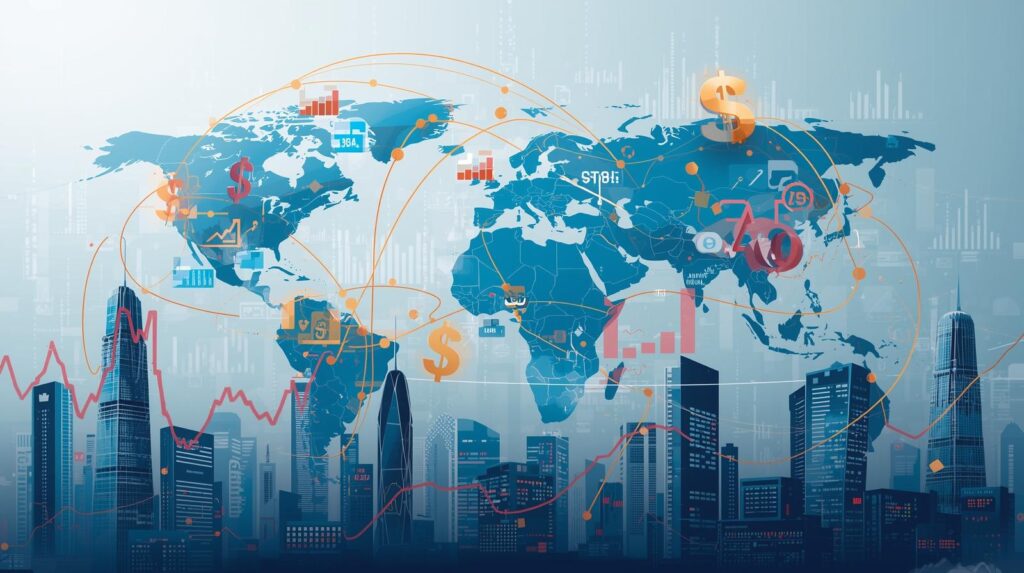
The global economy is the system of production, distribution, and consumption of goods and services across countries. It reflects how states, organizations, and markets interact to exchange resources, labor, and capital. Understanding the global economy is essential to analyze trade, investment, financial systems, and economic policies.
The global economy influences governance, security, and human development. Economic trends affect employment, production, international relations, and social stability. This article examines the structure, drivers, institutions, trends, challenges, and future of the global economy.
Structure of the Global Economy
The global economy consists of multiple components:
- Goods and Services: Production and consumption of tangible and intangible products.
- Financial Markets: Exchange of capital through stock markets, banking systems, and investment networks.
- Labor Markets: Supply and demand for workers across sectors and countries.
- Resources: Natural resources, energy, and raw materials supporting production.
- Trade Networks: Movement of goods and services across borders.
Countries participate as producers, consumers, investors, or regulators. Multinational corporations, international organizations, and financial institutions play key roles.
Drivers of the Global Economy
Trade
- Exchange of goods and services supports specialization and efficiency.
- Free trade agreements and regional blocs facilitate market access.
Capital Flows
- Investments in stocks, bonds, and direct projects drive economic growth.
- International banks and financial institutions facilitate cross-border capital.
Labor and Migration
- Workforce mobility impacts production, wages, and skill distribution.
- Migration addresses labor shortages and contributes to remittances.
Technology and Innovation
- Technological advancements improve production efficiency and communication.
- Innovation influences global competitiveness and new industries.
Policies and Regulations
- Government economic policies, monetary policies, and trade regulations shape markets.
- Central banks manage currency, inflation, and financial stability.
Institutions in the Global Economy
International Monetary Fund (IMF)
- Provides financial assistance, policy advice, and economic monitoring.
- Supports member countries during balance-of-payments crises.
World Bank
- Offers funding and expertise for development projects.
- Focuses on infrastructure, education, and social programs.
World Trade Organization (WTO)
- Regulates trade agreements and resolves disputes.
- Promotes predictable and fair international trade practices.
Regional Development Banks
- Example: Asian Development Bank, African Development Bank.
- Provide regional support for economic development projects.
Central Banks and Financial Regulators
- Maintain currency stability, control inflation, and supervise banking systems.
- Facilitate domestic and international financial transactions.
Trends in the Global Economy
Globalization
- Integration of markets, supply chains, and financial systems.
- Enables trade, investment, and movement of labor across borders.
Shifts in Economic Power
- Emerging economies gain influence in trade, production, and finance.
- Developed countries continue to lead in innovation and capital-intensive sectors.
Digital Economy
- E-commerce, digital payments, and online services expand economic activity.
- Data and technology drive efficiency and cross-border transactions.
Energy and Resource Economics
- Global energy demand shapes production, prices, and geopolitical relations.
- Renewable energy investment affects long-term economic trends.
Financial Integration
- Cross-border banking, investment, and capital markets increase interdependence.
- Financial crises can transmit rapidly across countries.
Challenges in the Global Economy
Economic Inequality
- Disparities between countries and within societies create social and political challenges.
- Addressing inequality requires coordinated policies, investment, and regulation.
Trade Conflicts
- Sanctions, tariffs, and protectionist measures disrupt market stability.
- Disputes can slow economic growth and reduce global cooperation.
Environmental Constraints
- Resource depletion, climate change, and pollution affect production and trade.
- Sustainable management is necessary for long-term economic stability.
Political Instability
- Conflicts, sanctions, and governance issues affect investment and trade flows.
- Stability is crucial for global economic predictability.
Technological Disruption
- Automation and digital transformation affect labor markets and traditional industries.
- Policies must address workforce adaptation and retraining.
Role of Trade in the Global Economy
International Trade
- Supports access to goods and services not produced domestically.
- Enables specialization and efficient resource allocation.
Trade Agreements
- Bilateral and multilateral agreements regulate tariffs, quotas, and market access.
- Examples: NAFTA/USMCA, EU Single Market, ASEAN Free Trade Area.
Sanctions and Restrictions
- Political or economic sanctions influence trade flows and state behavior.
- Can affect domestic industries, prices, and international relations.
Global Supply Chains
- Integration of production across countries increases efficiency.
- Disruptions can affect industries worldwide, such as during pandemics or conflicts.
Energy and Resources in the Global Economy
Energy Demand
- Oil, gas, coal, and renewable sources support industrial production and transportation.
- Energy prices impact trade balances and national budgets.
Resource Allocation
- Natural resources such as minerals, metals, and agricultural products drive global trade.
- Access to resources shapes economic policies and strategic decisions.
Energy Transition
- Shift toward renewable energy affects investment, employment, and industrial output.
- Countries adapt policies to balance energy security and sustainability.
Geopolitical Influence
- Resource distribution and energy supply routes affect international relations and trade agreements.
- Resource-rich countries have strategic leverage in global markets.
Global Economic Crises
Financial Crises
- Banking collapses, stock market crashes, and debt crises can spread across borders.
- Coordinated responses include IMF support, central bank intervention, and regulatory reforms.
Commodity Price Fluctuations
- Volatility in oil, metals, or agricultural products affects producer and consumer economies.
- Global monitoring and diversification reduce risks.
Currency Volatility
- Exchange rate fluctuations impact trade, investment, and debt servicing.
- Central banks use monetary policy to stabilize markets.
Pandemic and Disaster Impacts
- Health crises or natural disasters disrupt production, labor, and trade.
- International cooperation mitigates economic consequences.
Measuring the Global Economy
Gross Domestic Product (GDP)
- Sum of production within countries indicates economic size.
- Global GDP aggregates national economies for comparative analysis.
Trade Volume
- Total imports and exports reflect economic interdependence.
Investment Flows
- Foreign direct investment (FDI) indicates confidence and growth potential.
Employment and Labor Statistics
- Workforce participation and productivity indicate economic health.
Inflation and Currency Stability
- Price levels and exchange rates reflect economic stability and purchasing power.
Future of the Global Economy
Digital Transformation
- E-commerce, blockchain, and digital banking increase efficiency and transparency.
Sustainability and Green Economy
- Renewable energy and sustainable practices reduce environmental impact.
Emerging Markets
- Growth in Asia, Africa, and Latin America shapes production, consumption, and trade patterns.
Geopolitical Influence
- Shifts in power affect trade, energy policies, and economic alliances.
Policy Coordination
- International institutions will continue to play a role in regulation, crisis management, and sustainable growth.
Conclusion
The global economy is a complex network of production, trade, finance, and labor spanning multiple countries and institutions. It is influenced by policies, markets, technology, and global cooperation. Understanding its structure, trends, and challenges is crucial for governments, businesses, and organizations.
Global economic stability relies on coordination, regulation, and sustainable practices. Trade, investment, energy, and financial systems shape the interaction between countries. While challenges exist, adaptation, innovation, and cooperation remain key to a functioning global economy.