
Introduction
Global governance involves coordination among states, international organizations, and institutions to manage shared challenges. Four major pillars of global governance include the United Nations, international organizations, international law, and human rights. Together, these structures create frameworks for cooperation, regulation, and conflict resolution.
Understanding these elements helps explain how states cooperate, respond to crises, and maintain stability. These institutions influence diplomacy, security, development, and the rule of law. This article explores the purpose, structure, roles, and challenges of these global systems.
The United Nations
The United Nations (UN) is the principal organization for international cooperation. Established after World War II, its mission includes maintaining international peace, promoting development, and protecting human rights.
Structure of the United Nations
The UN has several main organs:
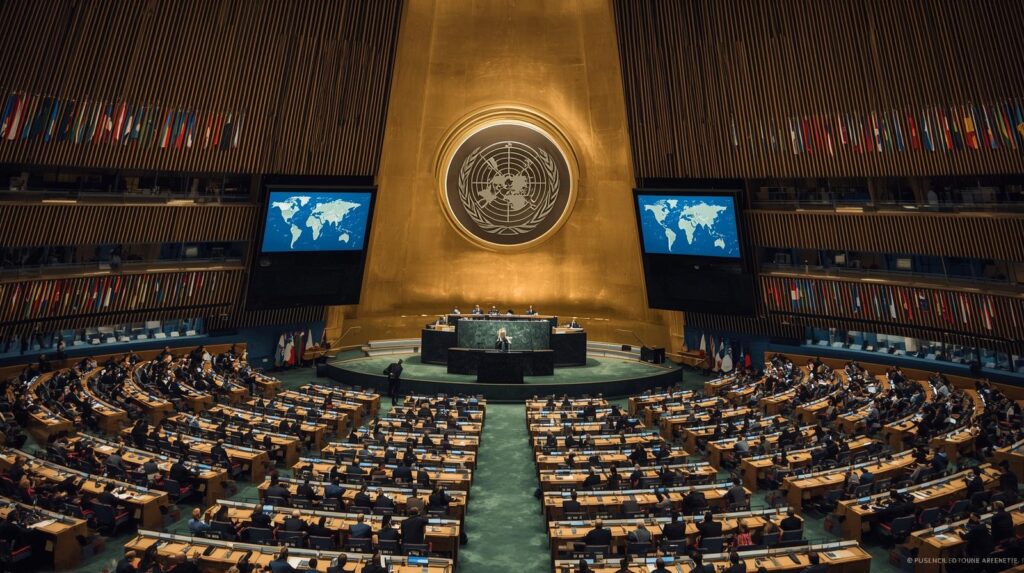
- General Assembly: A platform where all member states discuss global issues and adopt resolutions.
- Security Council: Responsible for maintaining international peace and security, with powers to impose sanctions or authorize military action.
- Economic and Social Council (ECOSOC): Coordinates international economic, social, and development work.
- International Court of Justice (ICJ): Settles legal disputes between states and provides advisory opinions.
- Secretariat: Manages day-to-day operations, headed by the Secretary-General.
- Trusteeship Council: Originally supervised territories preparing for independence, now inactive.
Roles of the United Nations
The UN functions in multiple areas:
- Peacekeeping and Conflict Prevention: Deploys missions to prevent escalation and stabilize conflict zones.
- Humanitarian Assistance: Coordinates responses to disasters, refugees, and crises.
- Development Support: Provides guidance and resources for sustainable development goals.
- Human Rights Protection: Monitors and promotes compliance with international human rights standards.
Challenges for the United Nations
- Limited enforcement powers: The UN relies on member states to implement decisions.
- Veto power in the Security Council: Permanent members can block resolutions.
- Resource constraints: Funding and staffing limit operations.
- Political differences among states: Conflicting interests may slow decision-making.
International Organizations
International organizations are institutions that facilitate cooperation between states on political, economic, social, and environmental issues.
Types of International Organizations
- Intergovernmental Organizations (IGOs): Composed of member states, e.g., NATO, World Bank, IMF.
- Non-Governmental Organizations (NGOs): Operate independently, often focusing on advocacy, development, or humanitarian work.
- Hybrid Organizations: Include both state and non-state participants, such as the Red Cross.
Functions of International Organizations
- Coordination: Align policies across countries on trade, health, and security.
- Standard-setting: Establish rules for finance, environment, or labor.
- Conflict Mediation: Facilitate dialogue and negotiation in disputes.
- Capacity Building: Provide technical assistance, training, and resources to member states.
Challenges for International Organizations
- Diverse mandates: Conflicting goals may limit effectiveness.
- Funding dependence: Reliance on member contributions can constrain operations.
- Limited authority: Most organizations cannot enforce compliance independently.
- Coordination complexity: Working across borders and cultures requires negotiation and compromise.
International Law
International law is a set of rules, norms, and principles governing relations between states and other international actors.
Sources of International Law
- Treaties and Conventions: Formal agreements between states that are legally binding.
- Customary Law: Practices that states consistently follow out of legal obligation.
- General Principles of Law: Principles recognized in national legal systems and applied internationally.
- Judicial Decisions and Opinions: Courts and tribunals provide interpretation and clarification.
Functions of International Law
- Regulating State Behavior: Sets rules for diplomacy, trade, and armed conflict.
- Protecting Sovereignty: Establishes norms for non-interference.
- Resolving Disputes: Provides mechanisms for negotiation, arbitration, or adjudication.
- Promoting Human Rights: Embeds standards and obligations for governments.
Key Areas of International Law
- Law of the Sea: Governs navigation, resource access, and territorial waters.
- Humanitarian Law: Regulates conduct during armed conflict, including treatment of civilians.
- Trade and Investment Law: Manages cross-border economic relations.
- Environmental Law: Addresses shared concerns like climate, pollution, and biodiversity.
Challenges in International Law
- Enforcement: Compliance depends on political will of states.
- Ambiguity: Interpretation of laws may vary across cultures and contexts.
- Conflicting Interests: States may prioritize national goals over legal obligations.
- Evolving Threats: Technology, cyber issues, and transnational challenges create gaps in existing law.
Human Rights
Human rights are the basic rights and freedoms entitled to every individual. They are universal, inalienable, and protected under international law.
Key Human Rights Instruments
- Universal Declaration of Human Rights (UDHR): Provides a foundation for global human rights standards.
- International Covenant on Civil and Political Rights (ICCPR): Guarantees freedoms like speech, assembly, and fair trial.
- International Covenant on Economic, Social and Cultural Rights (ICESCR): Addresses education, health, and labor rights.
- Convention on the Rights of the Child: Protects children from abuse, exploitation, and neglect.
Functions of Human Rights
- Protection from Abuse: Provides mechanisms to prevent arbitrary treatment.
- Guidance for States: Shapes legislation and governance practices.
- Accountability: Holds governments responsible for violations.
- Promotion of Justice: Supports equality, fairness, and social stability.
Human Rights and International Organizations
International organizations play a critical role:
- Monitoring: Agencies track compliance with human rights treaties.
- Reporting: Organizations report violations to the UN and other forums.
- Support: NGOs assist victims and raise awareness.
- Capacity Building: Help states implement legal and institutional frameworks for rights protection.
Challenges in Human Rights Protection
- Political Interference: Governments may resist external scrutiny.
- Cultural Differences: Interpretation of rights may vary regionally.
- Resource Constraints: Implementing rights requires funding and personnel.
- Conflict Situations: Human rights often suffer during war or crisis.
Interconnection Between UN, International Organizations, Law, and Human Rights
These pillars of global governance are interconnected:
- The UN coordinates peacekeeping, development, and human rights promotion.
- International organizations provide technical and institutional support to implement policies.
- International law creates binding obligations and frameworks for dispute resolution.
- Human rights guide norms and standards across countries.
Effective global governance requires cooperation among these elements. Together, they provide mechanisms to prevent conflict, protect populations, and ensure stability.
Global Challenges and Governance
Conflict and Security
Global institutions provide forums to prevent escalation and mediate disputes.
Climate and Environment
International agreements regulate emissions, conservation, and sustainable development.
Migration and Refugees
Coordination among states and organizations ensures humanitarian assistance and protection.
Technology and Cybersecurity
Global legal frameworks and cooperation address cross-border threats.
Future of Global Governance
- Increased Cooperation: Global challenges require multilateral coordination.
- Adaptive Institutions: Organizations need flexibility to respond to emerging issues.
- Strengthened Legal Frameworks: Updating international law to reflect technology and transnational risks.
- Promotion of Rights-Based Governance: Integration of human rights into policy and legal structures worldwide.
Conclusion
The United Nations, international organizations, international law, and human rights form the foundation of global governance. They provide mechanisms for cooperation, conflict management, legal regulation, and protection of individuals. Understanding these structures clarifies how states and institutions interact to maintain stability and address global challenges.
As global complexity increases, these frameworks remain central to guiding state behavior, promoting cooperation, and safeguarding human rights. Effective governance depends on the interaction and coordination among these pillars.